
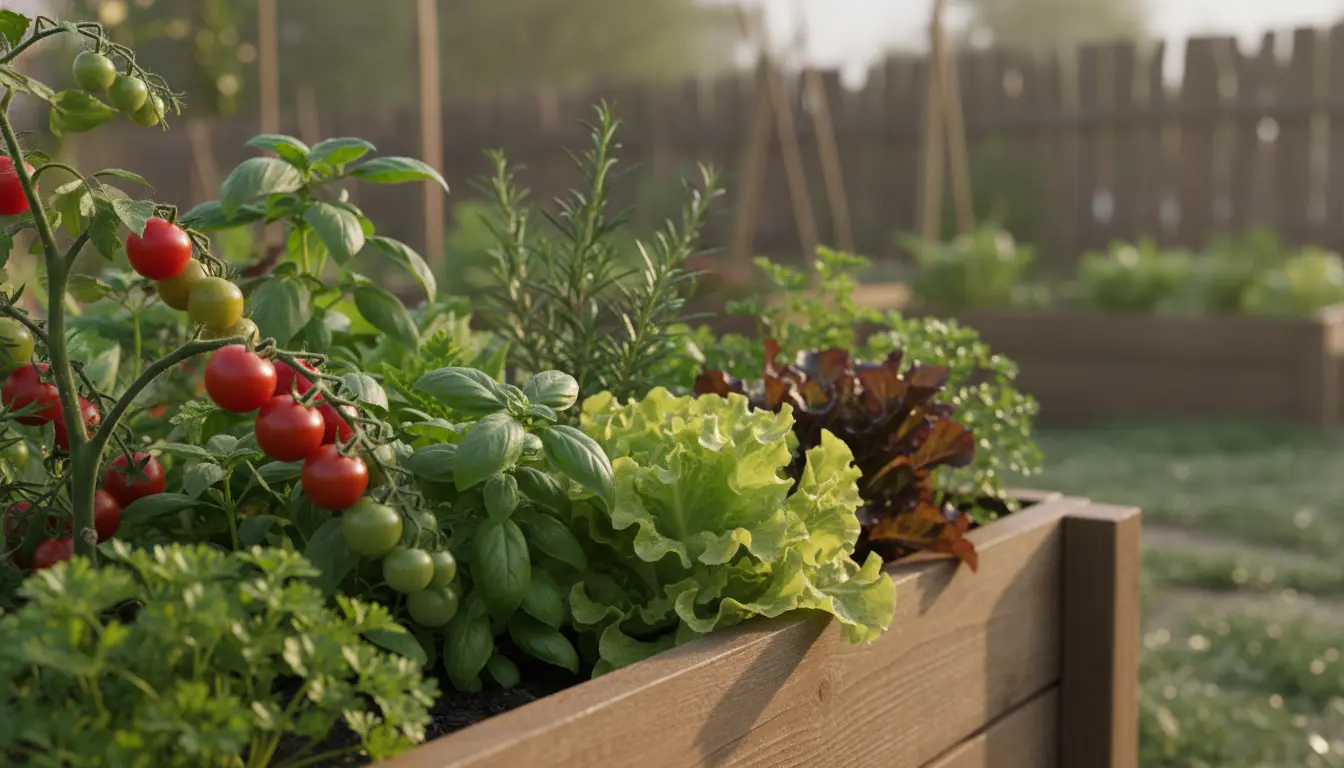
Why Start a Vegetable Garden at Home
Starting a vegetable garden at home gives you fresh produce, saves money, and improves your outdoor space. This guide shows step-by-step actions to move from planning to harvest.
Plan Your Vegetable Garden
Planning reduces mistakes and helps you choose the right crops for your space. Start by assessing sunlight, space, and local climate.
Choose a Location for Your Vegetable Garden
Select a spot with at least 6 hours of direct sunlight daily for most vegetables. Ensure good drainage and easy access to water.
Decide Garden Type and Size
Options include in-ground beds, raised beds, and containers. For beginners, a 4×8 or 10×10 raised bed is manageable and productive.
- Raised beds: better drainage, easier soil control.
- Containers: ideal for patios and balconies.
- In-ground: larger scale, lower initial cost but needs soil testing.
Prepare Soil for Your Vegetable Garden
Healthy soil is the foundation of a productive vegetable garden. Test soil pH and amend soil to ensure nutrients and structure are right.
Soil Testing and Amendments
Buy a basic soil test kit or send samples to a local extension service. Most vegetables prefer a pH of 6.0 to 7.0.
- Add compost to increase organic matter and microbial activity.
- Mix in aged manure or balanced organic fertilizer as needed.
- Use coarse sand or perlite to improve drainage in heavy clay soils.
Planting Schedule for Your Vegetable Garden
Knowing when to plant is critical. Use frost dates and crop categories to plan sowing and transplanting.
Cold-Hardy vs Warm-Season Crops
Cold-hardy crops (lettuce, spinach, peas) can be planted early. Warm-season crops (tomatoes, peppers, cucumbers) need warm soil and air.
- Early spring: peas, spinach, radishes.
- After last frost: tomatoes, peppers, beans.
- Succession planting: sow small amounts every 2-3 weeks for steady harvests.
Watering and Care for Your Vegetable Garden
Consistent water helps plants develop strong roots and reduce stress. Water deeply and less frequently rather than shallow daily watering.
Practical Watering Tips
Use drip irrigation or soaker hoses to reduce evaporation and disease risk. Mulch around plants to retain moisture and suppress weeds.
- Water in the morning to reduce fungal disease risk.
- Aim for 1 to 1.5 inches of water per week, adjusting for weather.
- Check soil moisture by feeling 2-3 inches below the surface.
Pest Control and Maintenance in Your Vegetable Garden
Integrated pest management (IPM) combines cultural, mechanical, and biological controls. Avoid over-reliance on chemicals.
Common Maintenance Tasks
- Weed regularly to prevent competition for nutrients.
- Inspect plants weekly for pests or disease signs.
- Rotate crops each year to reduce soil-borne diseases.
Natural Pest Control Options
Encourage beneficial insects like ladybugs and predatory wasps. Use row covers for seedlings and hand-pick large pests.
Case Study: Small 10×10 Raised Bed Vegetable Garden
Emma, a beginner gardener, set up a 10×10 raised bed on a sunny backyard spot. She followed a simple plan and tracked results.
- Soil: Mixed topsoil with 4 inches of compost before planting.
- Crops: Tomatoes (4), bush beans (6 rows), lettuce (staggered sowing), carrots (two rows), basil (3 plants).
- Watering: Drip line on a timer for 20 minutes every other morning.
Results after one season: Emma harvested enough tomatoes for weekly salads, stored carrots, and enjoyed continuous lettuce by succession planting. She learned to adjust watering and replace soil amendments each year.
Quick Tools and Supplies List for Your Vegetable Garden
- Hand trowel and spade
- Garden fork or rake
- Watering can or hose with nozzle
- Soil test kit and compost
- Mulch and stakes or cages for support
Final Tips to Keep Your Vegetable Garden Productive
Start small and expand as you gain experience. Keep a simple garden journal to track planting dates, weather, and yields.
Focus on easy, high-yield crops if you want quick results: lettuce, salad greens, bush beans, radishes, and cherry tomatoes perform well for beginners.
With steady care and a clear plan, anyone can start a vegetable garden at home and enjoy fresh produce all season.