
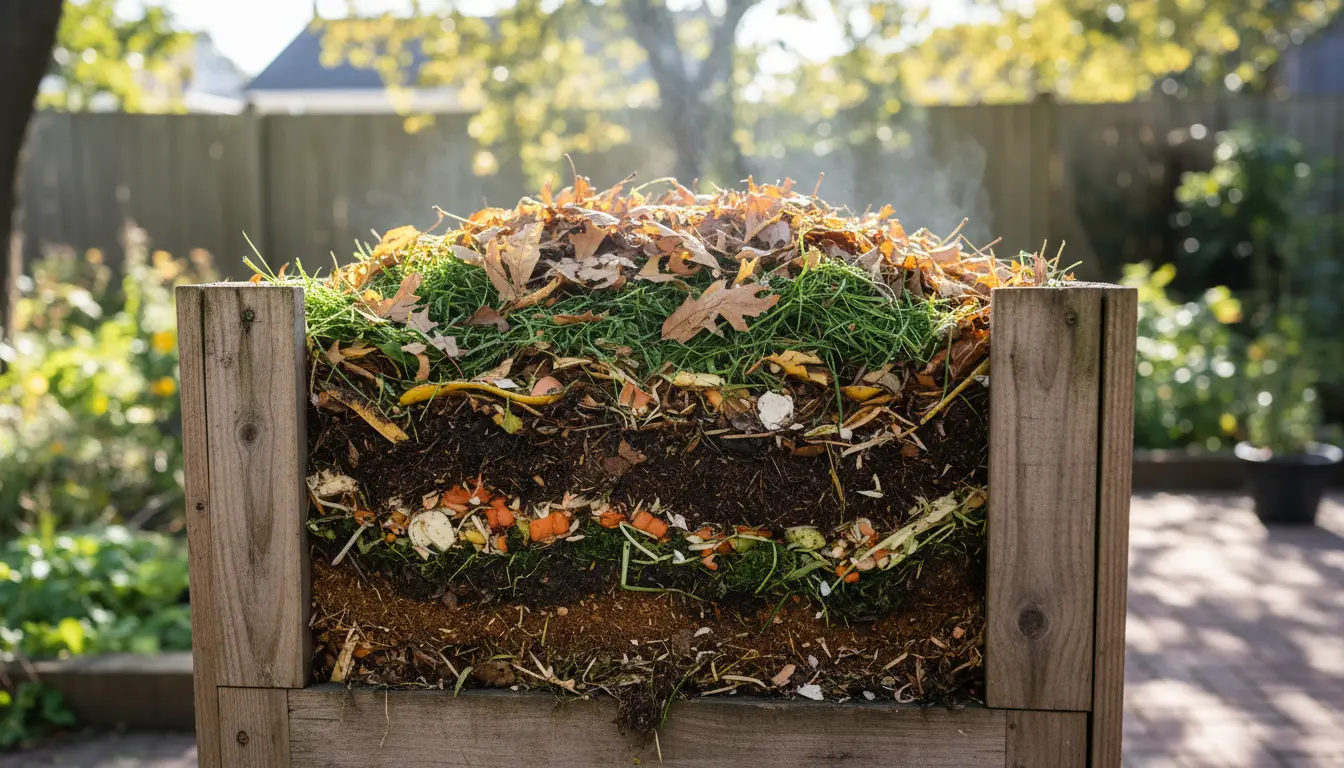
Why Home Composting Matters
Home composting reduces household waste and produces nutrient-rich soil for gardens and potted plants. It lowers landfill use and can reduce your carbon footprint in a simple, low-cost way.
This guide explains how to start composting at home, choose a bin, and maintain a healthy compost pile with practical steps you can follow today.
How to Start Composting at Home
Begin by selecting a location and a container suited to your space. Composting at home works in backyards, balconies, and small indoor setups with the right method.
Follow these basic steps to get started:
- Pick a bin: See choices below for options that fit your living situation.
- Balance brown and green materials: Layer carbon-rich and nitrogen-rich items.
- Maintain moisture and airflow: Keep the pile damp but not soggy and turn occasionally.
- Wait and monitor: Compost matures in weeks to months depending on conditions.
Choose the Right Bin for Home Composting
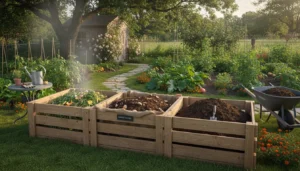
Choosing a compost bin depends on space, budget, and how fast you want compost. Common options include tumblers, stationary bins, and composting crates.
- Tumbler: Good for faster composting and easy turning. Works well in small yards.
- Stationary bin: Cheap and simple. Needs manual turning with a fork.
- Worm bin (vermicomposting): Ideal for apartments and indoor composting of kitchen scraps.
What to Compost and What to Avoid
Successful home composting depends on what you add. A good balance accelerates decomposition and prevents smell or pests.
Compostable items include:
- Green materials: fruit and vegetable scraps, coffee grounds, fresh grass clippings.
- Brown materials: dry leaves, shredded paper, cardboard, straw.
- Small amounts of garden trimmings: avoid large wood pieces unless chipped.
Do not compost:
- Meat, fish, bones, and dairy—these attract pests and cause odors.
- Oily or processed foods and pet waste from carnivores.
- Diseased plants or weeds with ripe seeds.
Maintaining Your Compost Pile
After you set up a bin and add initial layers, routine maintenance keeps compost healthy. Aim for a crumbly, earthy-smelling product.
Key maintenance tasks:
- Turn the pile every 1–2 weeks to add oxygen. Use a pitchfork or turn a tumbler.
- Monitor moisture: squeeze a handful; it should feel like a wrung-out sponge.
- Adjust the balance: add browns if too wet or smelly; add greens if too dry and slow.
Common Problems and Fixes for Home Composting
If your compost smells bad, it is likely too wet or has too much nitrogen. Add dry brown materials and turn the pile.
If decomposition is slow, the pile may be too dry or too cold. Add water and more green material, and consider chopping large pieces to speed breakdown.
About 30 to 40 percent of household waste is compostable. Properly managed compost can heat to 130–160°F, killing many weed seeds and pathogens.
Fast Tips for Composting at Home
- Chop or shred materials to speed decomposition.
- Layer alternating browns and greens for balance.
- Use a kitchen caddy or small bucket with a lid for daily scraps.
- Cover fresh food scraps with a layer of brown material to deter pests.
Small Case Study: Apartment Composting Success
Maria lives in a third-floor apartment and started composting at home using a worm bin under her sink. She collected food scraps in a small counter caddy and emptied it into the bin twice weekly.
Within three months she had rich vermicompost for her balcony herbs. She reduced her trash by nearly half and noticed healthier basil and mint from the worm castings.
Key actions that helped Maria succeed:
- Choosing vermicomposting to fit small spaces and avoid odors.
- Keeping a balanced feed of greens and shredded paper as brown material.
- Maintaining steady moisture and feeding the worms regularly.
When Is Compost Ready to Use?
Finished compost is dark, crumbly, and smells earthy. You should not be able to recognize most original materials. The time to maturity varies from 1 month for hot, actively managed piles to a year for slow backyard piles.
Use finished compost to top-dress lawns, mix into potting soil, or enrich garden beds. Start with a shallow application and increase over time.
Final Checklist for Home Composting
- Choose a bin that fits your space and needs.
- Balance green and brown materials.
- Keep the pile moist and aerated.
- Monitor for common issues and adjust quickly.
- Harvest and use finished compost to close the loop.
Home composting is a practical step toward less waste and healthier soil. Start small, be consistent, and adjust as you learn what works best for your home.