
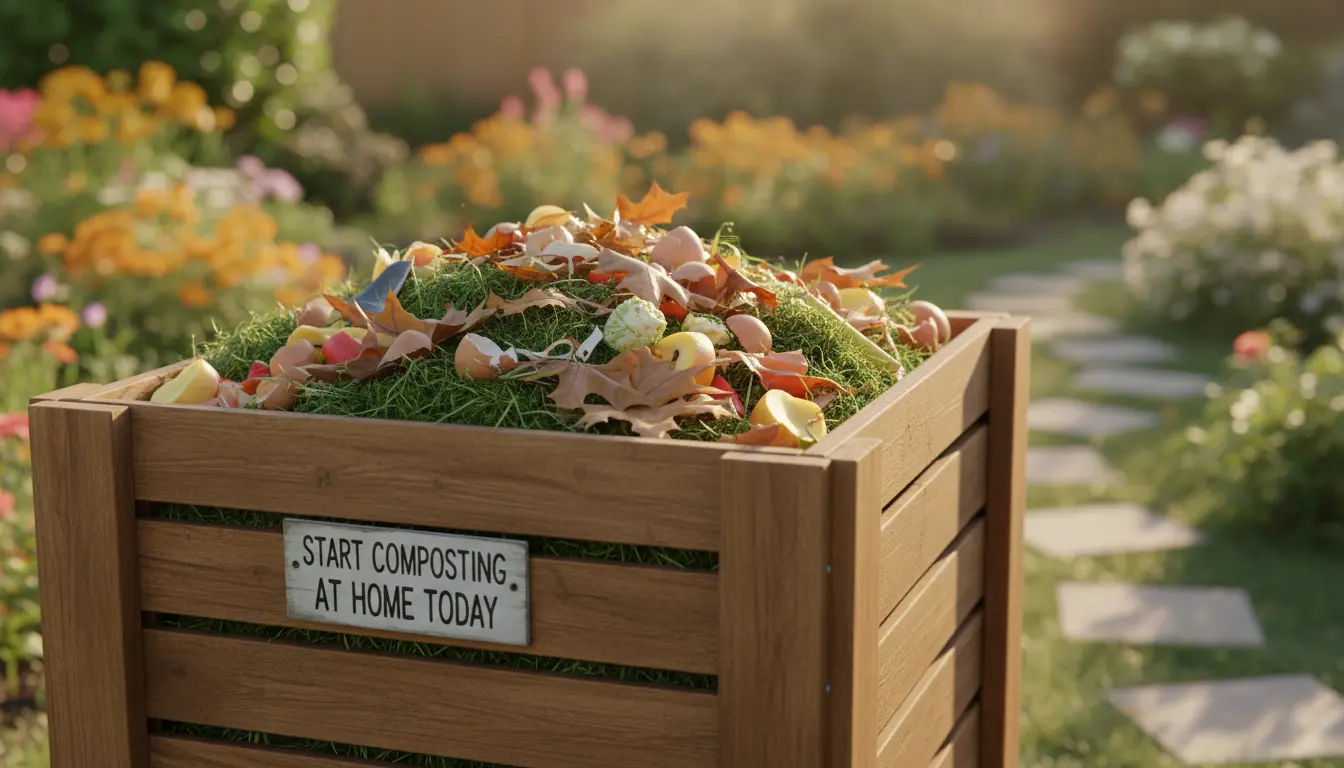
Composting at home turns kitchen scraps and yard waste into valuable soil amendment. It reduces landfill waste and supports healthier plants without chemical fertilizers.
Why Composting at Home Matters
Composting at home closes the loop on organic waste and returns nutrients to the soil. It reduces methane emissions from landfills and lowers household trash volume.

For gardeners, compost improves soil structure, water retention, and nutrient availability. Even apartment dwellers can contribute with small-scale systems.
How to Start Composting at Home
Starting composting at home requires picking a method, gathering materials, and managing the pile. The basics are simple and adaptable to most living situations.
Choosing a Composting Method
Choose a method that fits your space and schedule. Each method still follows the same principle of balancing carbon and nitrogen and providing air and moisture.
- Backyard bin: A tumbling or stationary bin is good for gardens and moderate volumes.
- Compost pile: For larger yards, a simple heap works and can handle bulky yard waste.
- Vermicomposting: Worm bins are ideal for small spaces and apartments and process kitchen scraps quickly.
- Bokashi: Fermentation in a closed bucket suits people who want indoor composting without odors.
What to Compost

Good compost needs a mix of “greens” (nitrogen) and “browns” (carbon). Aim for a rough balance to keep decomposition active.
- Greens: fruit and vegetable scraps, coffee grounds, fresh grass clippings.
- Browns: dry leaves, shredded paper, straw, cardboard.
- Avoid: meat, dairy, oily foods, diseased plants, and pet waste in typical home bins.
How to Maintain Your Compost
Maintenance is low effort when you follow simple routines. Regular turning and moisture checks keep microbes active and prevent odors.
- Turn or mix the pile every 1–2 weeks for aerobic composting.
- Keep moisture like a wrung-out sponge; add water or dry browns as needed.
- Layer greens and browns; cover fresh food scraps with browns to deter pests.
- Use a thermometer for hot composting: 130–150°F (55–65°C) speeds up decomposition.
Troubleshooting Common Problems in Composting at Home
Small issues are common and usually easy to fix. Identify the symptom, then apply the simple remedy below.
- Bad smells: Add more browns, turn the pile, and check moisture. Smells indicate anaerobic conditions.
- Pests or rodents: Bury food scraps, use a closed bin, or switch to bokashi for indoor treatment.
- Slow decomposition: Increase surface area by shredding materials and ensure a balanced green to brown ratio.
- Too wet or dry: Adjust water and add absorbent browns or water accordingly.
Small Real World Example
Case Study: A two-person household in a city converted to vermicomposting. They used a 10-gallon worm bin under the sink for six months.
Results: Weekly additions of kitchen scraps and shredded paper produced rich worm castings. They reduced trash volume by about 30 percent and used the compost for balcony potted plants, which showed improved growth and fewer waterings.
Tip: Start small and scale up once you understand processing rates and maintenance needs.
Composting can divert more than 30 percent of household waste from landfills. A typical family of four can compost roughly 400 to 600 pounds of organic waste per year.
Using Finished Compost
Finished compost is dark, crumbly, and earthy-smelling. Use it to topdress lawns, mix into garden beds, or pot up seedlings.
Application ideas:
- Mix 1 part compost to 3 parts soil for new beds.
- Topdress established garden beds with a 1–2 inch layer annually.
- Blend with potting mix at 10–20 percent for container plants.
Quick Start Checklist for Composting at Home
- Choose a container or method that fits your space.
- Collect a steady supply of greens and browns.
- Maintain moisture and aeration with regular turns.
- Monitor for pests, odors, and moisture issues.
- Harvest finished compost and apply to plants.
Composting at home is a practical way to reduce waste and improve soil health. Start with small, manageable steps and learn by doing. Over a few months you will see waste shrink and plant health improve.