
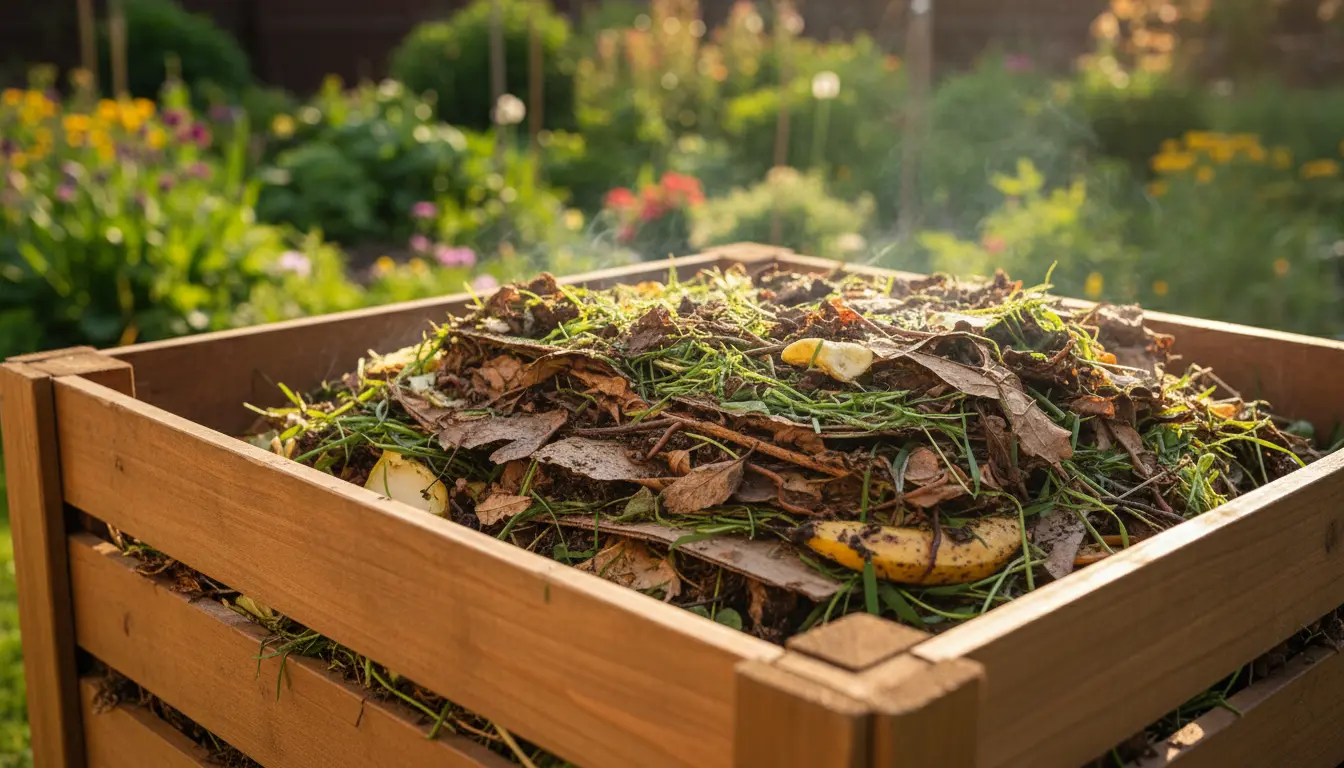
Composting at home turns kitchen and yard waste into rich soil for plants. This guide gives clear, practical steps for beginners to start composting with minimal fuss.
What Is Home Composting?
Home composting is a natural process that breaks down organic waste into humus. It is safe, low cost, and reduces household trash while improving garden soil.
Compost feeds plants, retains moisture, and supports soil microbes. You can compost in a backyard bin, tumbler, or even a small indoor system.
Getting Started With Home Composting
Decide on a method that fits your space and routine. Options include a simple pile, a bin, or a compost tumbler for faster turning.
Choose a level, well-drained location for an outdoor pile. If you live in an apartment, use a small indoor bokashi or worm bin to manage food scraps.
Choosing a Compost Bin
Plastic or wooden bins are common for outdoor use. Tumblers speed up decomposition and make turning easier, while open piles are cheapest.
For small spaces, try a worm bin (vermicompost) or a sealed kitchen collection that you empty into a shared community bin. Match the bin to the amount of waste you produce.
Compost Materials: Greens and Browns
Compost needs a balance of nitrogen-rich “greens” and carbon-rich “browns.” Greens are food scraps, grass clippings, and fresh plant trimmings.
Browns include dried leaves, cardboard, paper, and straw. Aim for roughly 2 parts browns to 1 part greens by volume for a stable mix.
How To Build a Compost Pile
Start with a thin layer of coarse material like twigs to help airflow. Add alternating layers of greens and browns to maintain balance.
Keep the pile moist but not soggy, like a wrung-out sponge. Turn or aerate the pile regularly to introduce oxygen and speed up decomposition.
Turning and Maintenance
Turn the pile every 1–2 weeks if you want finished compost in a few months. If you leave it longer, turn less often but expect slower results.
Use a pitchfork or tumbler mechanism to mix materials. Check moisture and add water during dry periods or add browns if too wet.
Troubleshooting Common Problems
Bad smells usually mean too much green or poor airflow. Add more browns and turn the pile to fix odors quickly.
Pests are attracted to meat, dairy, and oily foods. Avoid adding these items to open piles or use sealed compost systems to prevent wildlife visits.
If the pile is slow to decompose, check the particle size and oxygen. Shred large pieces and turn more often to reactivate the process.
Using Finished Compost
Finished compost is dark, crumbly, and smells earthy. Sift out large pieces and use the compost as a soil amendment or mulch for flower beds and vegetable gardens.
Mix compost into potting soil or top-dress lawns and garden beds. A thin layer will slowly release nutrients and improve structure over time.
Small Real-World Case Study
Case Study: Sarah, a city renter, started a worm bin on her balcony. She fed the bin mostly vegetable scraps and shredded paper, and checked moisture weekly.
Within three months she harvested nutrient-rich vermicompost for her container tomatoes. Her waste output fell by half and plant yields improved noticeably.
Tools and Supplies For Beginners
- Compost bin or tumbler
- Pitchfork or turning tool
- Kitchen scrap container with lid
- Garden gloves and a thermometer (optional)
These basic tools make composting easier and more reliable. A compost thermometer helps you manage heat in larger piles but is not essential.
Tips for Faster Results
- Shred or chop materials into small pieces.
- Maintain the green-to-brown ratio near 1:2.
- Keep the pile moist and aerate regularly.
- Add finished compost to active piles to introduce microbes.
Composting can reduce household waste by up to 30 percent and returns nutrients to the soil instead of sending them to landfill.
Quick Do’s and Don’ts
- Do add a mix of greens and browns regularly.
- Do keep the pile moist but not saturated.
- Don’t add meat, dairy, or oily foods to open outdoor piles.
- Don’t let the pile become compacted; aerate often.
Final Checklist to Start Composting
- Pick a bin or method that fits your space.
- Gather a steady supply of browns like shredded paper or leaves.
- Collect kitchen scraps and add them regularly.
- Monitor moisture and turn the compost every 1–2 weeks.
Home composting is a simple, practical way to reduce waste and improve your garden soil. With basic tools and regular attention, beginners can create rich compost in a few months.
Start small, adjust as you learn, and use compost to feed plants and reduce your environmental footprint. Composting is a low-cost habit with clear rewards for both gardens and the planet.