
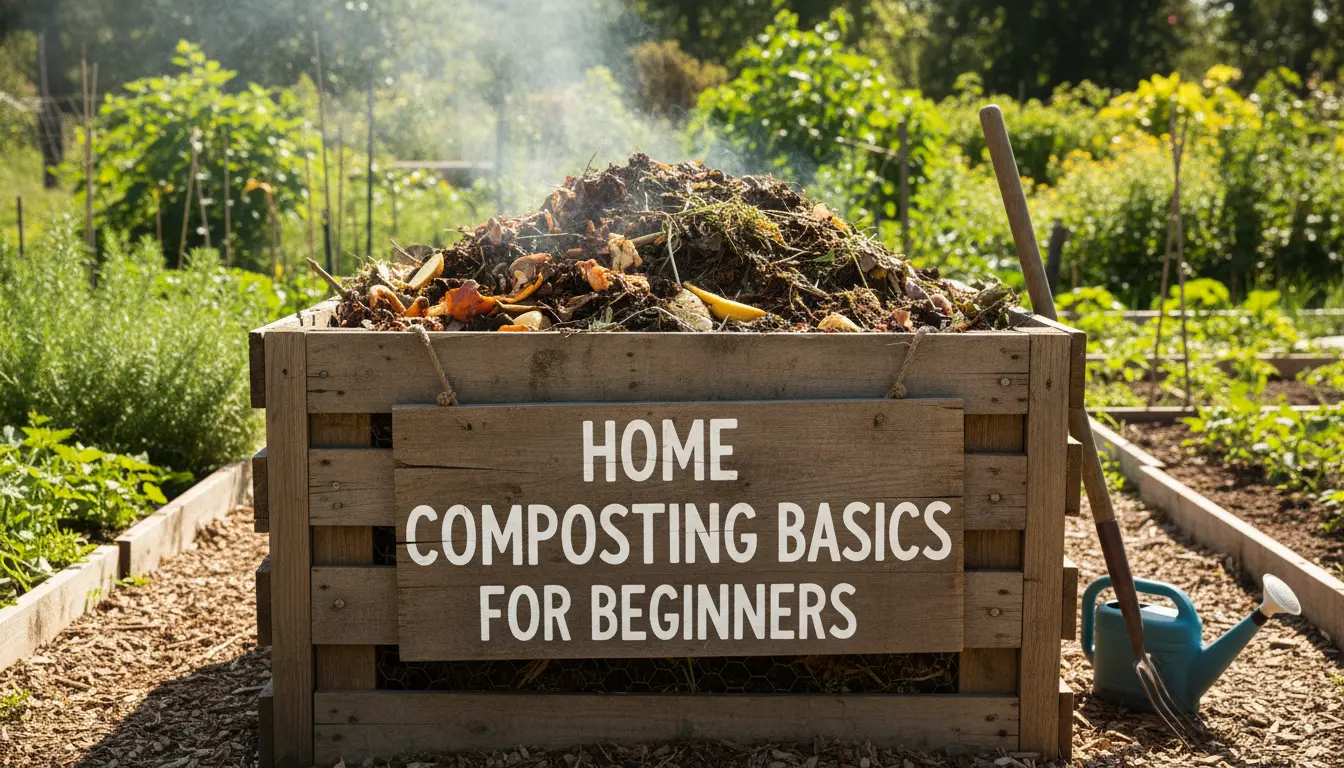
Composting at home turns food scraps and yard waste into nutrient-rich material you can use in gardens or planters. This guide gives clear, practical steps to help beginners start composting with confidence.
Why Home Composting for Beginners Is Useful
Home composting reduces landfill waste and produces a free soil amendment for plants. It also helps retain moisture in soil and supports healthy microbial life.
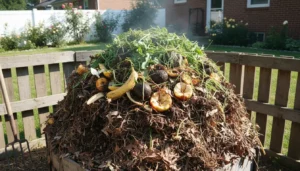
Beginners can start with small systems and scale up as they learn what works in their climate and living situation.
Choose the Right Compost System
Selecting the right system depends on space, smell tolerance, and how much waste you produce. Small households can use a tumbling bin or a simple closed bin. Larger households or gardeners may prefer a pile or layered bins.
Common options for beginners
- Plastic or metal tumblers — easy to turn and contain odors.
- Stationary closed bins — low maintenance, less work to build.
- Open compost piles — low cost, good for large volumes and yard waste.
- Vermicompost (worm bin) — ideal for apartments and kitchen scraps, produces fast, high-quality compost.
What to Compost: Greens and Browns
Effective composting relies on a balance between green (nitrogen-rich) and brown (carbon-rich) materials. Aim for roughly a 3:1 ratio of browns to greens by volume for aerobic systems.
Examples of greens
- Fruit and vegetable scraps
- Coffee grounds and tea leaves
- Fresh grass clippings
Examples of browns
- Dry leaves and twigs
- Shredded paper and cardboard (non-glossy)
- Straw or sawdust in small amounts
Step-by-Step: How to Start Composting at Home
Follow these simple steps to begin. Each step is practical and requires minimal tools.
- Pick a bin location: a shaded, level spot near a water source is best.
- Layer your materials: start with coarse browns for aeration, then add greens and finer browns.
- Maintain moisture: compost should feel like a wrung-out sponge, not soggy or bone dry.
- Turn periodically: aerate the pile every 1–2 weeks for faster decomposition in aerobic systems.
- Harvest: finished compost is dark, crumbly, and smells earthy. Use it after 2–6 months depending on conditions.
Maintenance Tips for Home Composting for Beginners
Regular small actions keep compost healthy and reduce problems like pests and odors.
- Chop or shred larger items to speed breakdown.
- Add dry browns if the pile smells ammonia-like.
- Turn or mix to introduce air; tumblers make this easier.
- Cover food scraps with a layer of browns to deter flies and rodents.
Troubleshooting common issues
If compost is too wet and slimy, add dry browns and turn. If it is too dry, add water and fresh greens. Slow decomposition often means the pile is too compacted or lacks nitrogen.
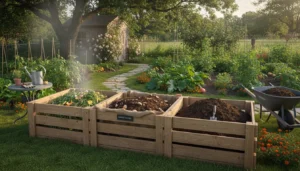
Adding a handful of finished compost or garden soil to a new pile introduces microbes that speed up decomposition.
Small Scale Case Study: A Simple Balcony Worm Bin
Case study: Maria lives in a two-bedroom apartment and started vermicomposting in a stacked plastic bin. She collects kitchen scraps in a small container and feeds her worm bin 3 times a week.
Within three months she harvested rich worm castings that she mixed into potting soil for balcony tomatoes. Her system cut food waste by nearly half and improved plant health.
What to Avoid in Home Composting
Some items slow decomposition or cause problems and should be avoided in small home systems.
- Meat, fish, dairy, and bones — attract pests unless you have a hot, contained system.
- Oily foods and greasy takeout containers — slow breakdown and create odors.
- Diseased plants, invasive weeds, and pet waste — can spread pathogens or seeds.
Using Finished Compost
Apply finished compost to garden beds, mix into potting soil, or use as mulch around shrubs. It improves structure, nutrient retention, and microbial activity.
Start with a thin topdressing or mix 1 part compost to 3 parts soil for potting mixes.
Quick Checklist for Home Composting for Beginners
- Choose a bin appropriate for your space.
- Balance greens and browns; aim for aeration.
- Keep the pile moist and turn regularly.
- Avoid meat, dairy, and pet waste unless using specialized systems.
- Use finished compost to improve soil and plants.
Starting small and observing your system each week will teach you how to adjust materials and maintenance. With a little attention, home composting becomes an easy, rewarding habit that benefits both your plants and the environment.