
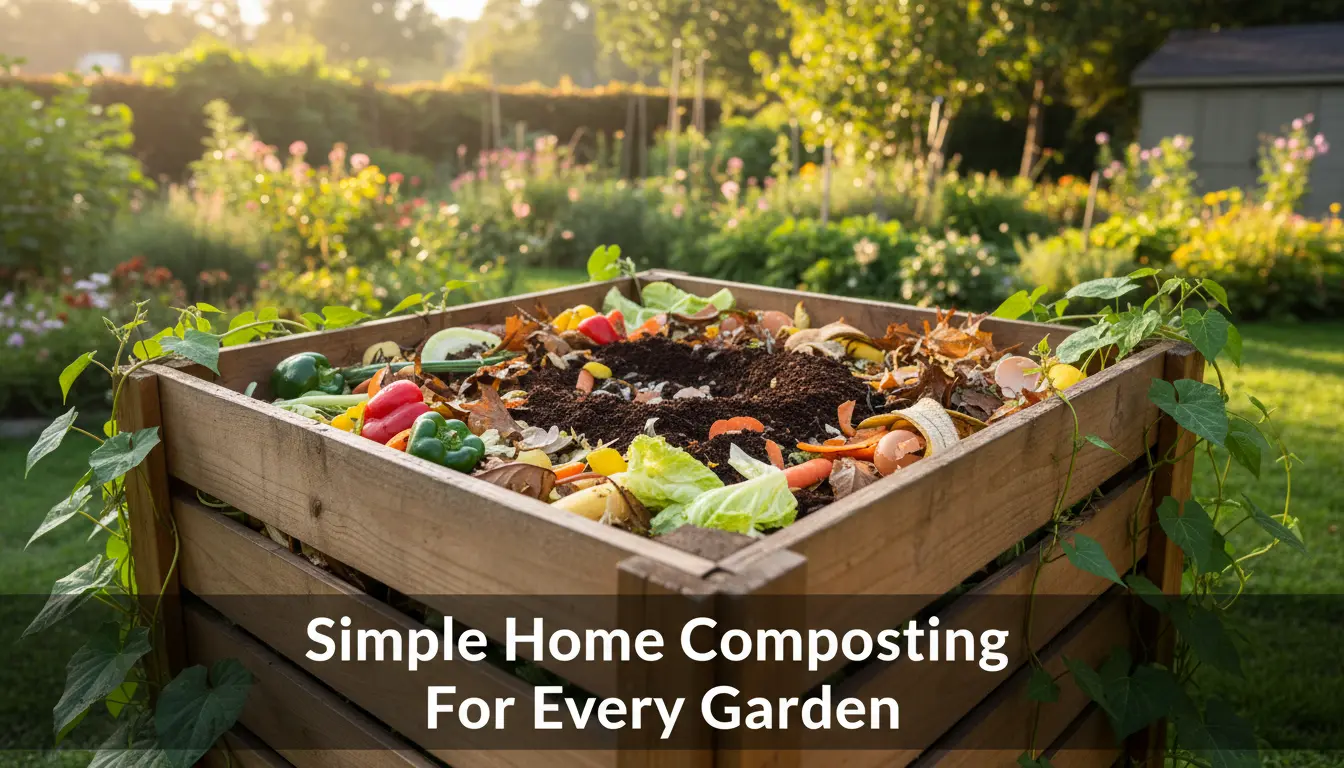
Why Home Composting Matters
Home composting reduces kitchen and yard waste while producing rich material that improves soil and plant health. It lowers household garbage and helps your garden retain water and nutrients.
For beginners, composting might seem technical, but the basic idea is simple: balance green and brown materials, keep the pile aerated, and control moisture.
What Is Home Composting?
Home composting is the controlled decomposition of organic waste like vegetable scraps, coffee grounds, and leaves. Microbes break the material down into dark, crumbly compost called humus.
Compost feeds plants, reduces the need for chemical fertilizers, and recycles household organics into a useful product.
Tools and Bin Options for Home Composting
Choose a method that fits your space and lifestyle. Each option has pros and cons for beginners.
- Open pile — Low cost, simple for yards, needs turning and some space.
- Compost bin — Tidy and compact; choose plastic or wooden models with good ventilation.
- Tumbler — Easy turning and faster results; good for small yards but costs more.
- Bokashi — Fermentation system for apartments; handles meat and dairy but requires final burial or composting step.
How to Start Home Composting: Step-by-Step
Follow these practical steps to begin home composting today.
1. Pick a Location
Choose a spot with some shade and good drainage. If you use a bin, place it on soil to allow worms and microbes access.
2. Gather Materials
Collect a mix of greens and browns. Greens are nitrogen-rich; browns provide carbon.
- Greens: fruit and vegetable scraps, coffee grounds, fresh grass clippings.
- Browns: dry leaves, shredded paper, cardboard, straw.
3. Build the Pile

Start with a layer of coarse browns to help airflow. Alternate green and brown layers about 2–4 inches thick.
A simple ratio to aim for is roughly 2–3 parts browns to 1 part greens by volume.
4. Manage Moisture and Aeration
The pile should be as damp as a wrung-out sponge. Add water if dry, or add more browns if too wet.
Turn the pile every 1–2 weeks for faster composting; tumblers make this easier.
What to Compost and What to Avoid
Knowing what goes in the compost helps avoid pests and odors.
- Good to compost: fruit and vegetable scraps, coffee grounds, eggshells, tea bags, yard trimmings.
- Avoid: meat, fish, dairy, oily foods, diseased plants, pet waste (unless using hot composting at high temps).
Troubleshooting Common Problems
Problems are usually easy to fix once you identify the cause.
- Smelly compost: Add more browns and turn to increase airflow.
- Slow decomposition: Chop materials smaller, add greens, and check moisture.
- Fruit flies: Bury food scraps under browns and cover the bin.
- Pile too dry: Water lightly and mix to distribute moisture.
How Long Does Composting Take?
Time varies by method. With good aeration and balanced materials, compost can be ready in 2–4 months. Slow methods may take 6–12 months.
Finished compost is dark, crumbly, and has an earthy smell. It should no longer resemble the original materials.
Small Case Study: A Family’s First Year of Home Composting
Example: The Patel family in a suburban backyard started a 200-liter compost bin. They collected kitchen scraps in a small countertop bucket and added shredded newspaper as browns.
By following a 2:1 brown-to-green approach and turning the bin weekly, they produced about 40 liters of usable compost in six months. Their vegetable beds showed improved growth and retained moisture longer through summer.
Practical Tips for Beginners
- Keep a small sealed kitchen caddy to reduce trips outside and avoid odors indoors.
- Chop larger items to speed decomposition.
- Save shredded paper and dry leaves in a bin to keep a steady supply of browns.
- Use finished compost as mulch, potting mix amendment, or top dressing for lawns and beds.
Composting one household can divert up to 600 kg (about 1,300 pounds) of waste from landfills per year, depending on family size and habits.
Quick Starter Checklist
- Choose bin type and location.
- Collect greens and browns separately.
- Layer materials and monitor moisture.
- Turn weekly or use a tumbler for faster results.
- Harvest finished compost and use it in your garden.
Final Notes on Home Composting for Beginners
Start small and learn by doing. Composting is forgiving; most mistakes are correctable with a bit of adjustment.
With basic tools and a regular routine, beginners can produce valuable compost and reduce household waste within months.