
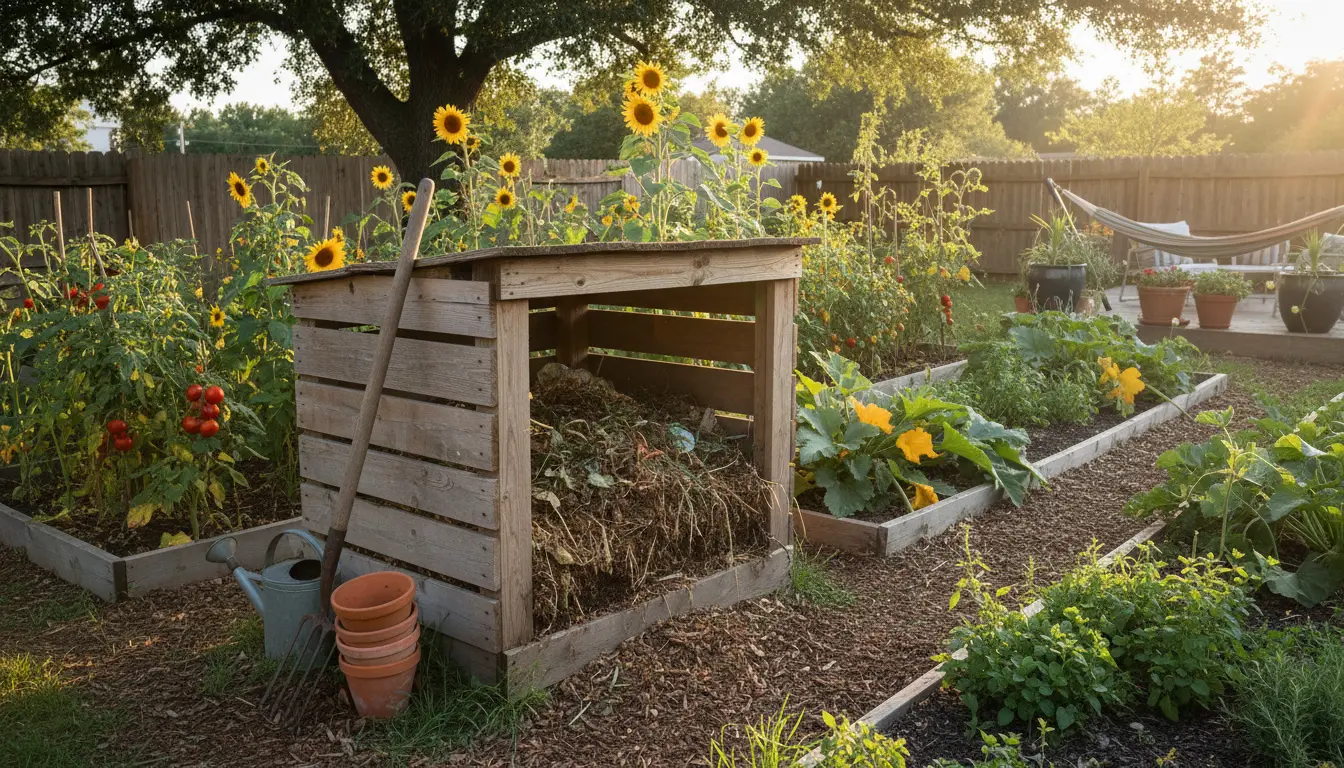
Composting turns kitchen scraps and yard waste into rich soil. Home composting reduces trash, improves garden health, and is easier than many people think.
What Is Home Composting and Why It Matters
Home composting is the process of decomposing organic materials at a household scale. It creates a nutrient-rich product called compost that feeds plants and reduces landfill waste.
Composting lowers methane emissions from landfills and returns carbon and nutrients to soil. For gardeners and homeowners, it is a cost-effective way to improve soil structure and water retention.
Basic Principles of Home Composting
Successful composting balances three key elements: carbon, nitrogen, and oxygen. Carbon-rich materials are called browns and nitrogen-rich materials are called greens.
- Carbon (browns): dry leaves, straw, shredded paper, cardboard.
- Nitrogen (greens): vegetable scraps, coffee grounds, fresh grass clippings.
- Oxygen: turning the pile to allow aerobic decomposition.
A good mix is roughly 25–30 parts carbon to 1 part nitrogen by weight, but a practical mix is layering browns and greens approximately 2:1 by volume.
How to Start Home Composting: Step by Step

Starting is quick and inexpensive. Follow these steps to set up a basic backyard bin or tumbler.
1. Choose a Container or Location
Select a compost bin, tumbler, or a simple open pile. Place it on bare soil in a partially shaded spot to encourage soil organisms to enter the pile.
Common options include plastic bins, wooden pallets, or commercial tumblers for quicker turning.
2. Add Materials in Layers
Begin with a layer of coarse browns like small branches for airflow. Add alternating layers of greens and browns.
A standard approach: 2–4 inches of greens, followed by 4–6 inches of browns. Keep material pieces small to speed decomposition.
3. Maintain Moisture and Aeration
Compost should be as damp as a wrung-out sponge. Add water during dry periods and cover if it rains excessively.
Turn the pile every 1–2 weeks to introduce oxygen. Tumblers make turning simple; open piles can be turned with a pitchfork.
4. Troubleshoot Common Problems
Odor usually means too much nitrogen or poor aeration. Add more browns and turn the pile.
Slow decomposition may indicate the pile is too dry, too cold, or too coarse. Chop materials and adjust moisture and size.
Types of Home Composting Systems
Choose a system that fits your space and needs. Each has trade-offs in speed, maintenance, and cost.
- Open pile: cheapest, works well in large yards, slower and less tidy.
- Bin system: contained, tidy, and retains heat better than open piles.
- Tumbler: fastest for small spaces and easy turning, usually pricier.
- Vermicomposting: uses worms to compost food scraps indoors or in a shaded spot.
What to Compost and What to Avoid
Most kitchen scraps and yard waste are safe to compost. Follow simple rules to keep pests and disease out.
- Good to compost: fruit and vegetable scraps, coffee grounds, tea bags, eggshells, leaves, shredded paper.
- Avoid or limit: meat, dairy, oily foods, diseased plants, pet waste, and invasive weeds.
How to Use Finished Compost
Compost is ready when it is dark, crumbly, and smells earthy. It typically takes 3–12 months depending on the method and conditions.
Use finished compost as a top dressing, soil amendment, or potting mix ingredient. Apply a 1–3 inch layer to garden beds or mix into planting holes.
Small Real-World Case Study: A Backyard Starter
Case: Sarah, a homeowner with a small vegetable garden, began home composting using a 95-gallon tumbler. She collected kitchen scraps and yard trimmings in a countertop pail and emptied it into the tumbler twice weekly.
After six months of regular turning and balancing browns and greens, she produced enough compost to top-dress two raised beds and cut her weekly trash by 40 percent. Her tomatoes showed improved yield the next season.
Practical Tips and Quick Checklist
- Start small: one bin is enough to learn on.
- Chop or shred materials to speed decomposition.
- Keep a small kitchen caddy to collect scraps and reduce trips to the bin.
- Monitor moisture: add water or cover as needed.
- Save a portion of finished compost for planting time.
One ton of food waste composted at home can prevent about 700 pounds of CO2 equivalent emissions from landfill methane. Home composting can significantly reduce household greenhouse gas emissions over time.
Final Notes on Home Composting
Home composting is a low-cost, high-impact way to manage organic waste. It improves soil, reduces waste, and is adaptable to most living situations.
Start with simple steps, learn by doing, and adjust based on what your compost pile needs. Over time you will produce valuable compost and reduce your environmental footprint.