
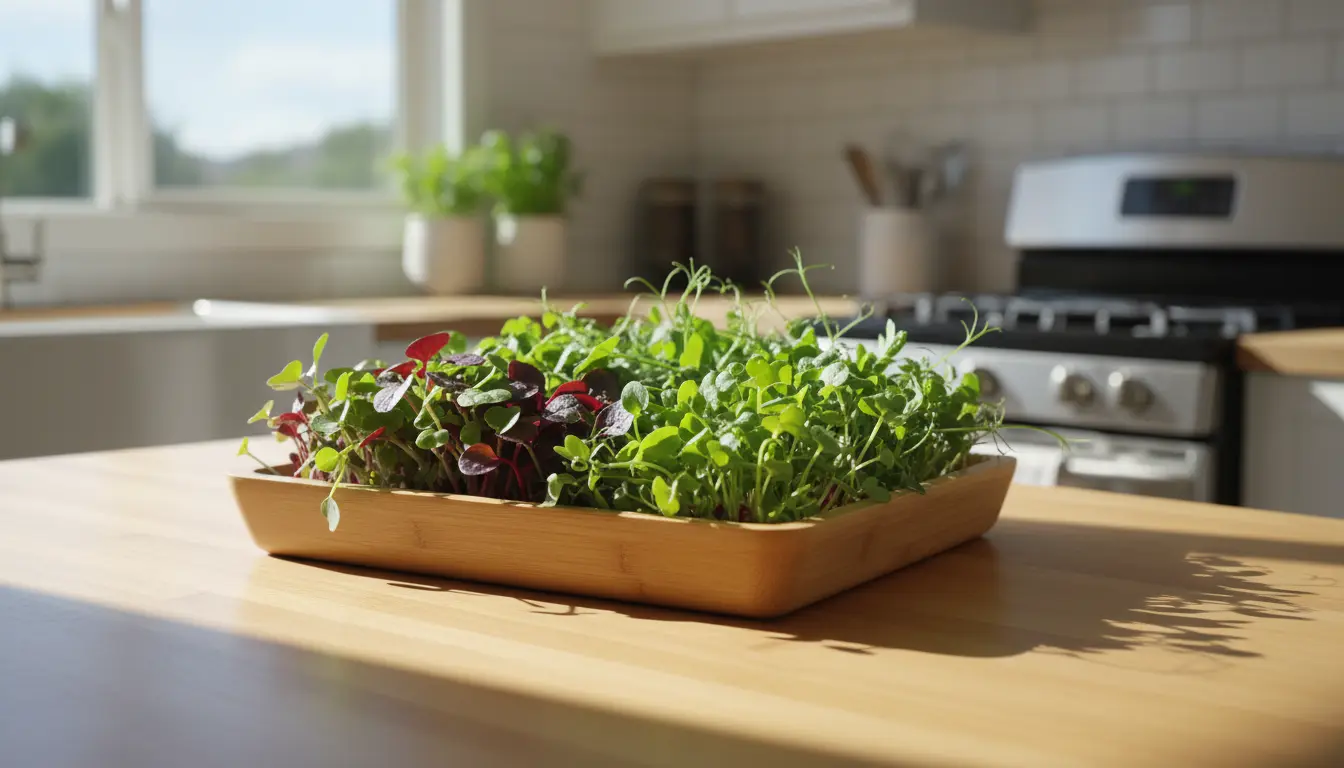
Growing Microgreens at Home: Why Start
Microgreens are young vegetable or herb seedlings harvested shortly after sprouting. They are nutrient-dense, quick to grow, and require little space, making them ideal for apartments and small kitchens.
This guide explains how to grow microgreens at home with clear steps, common troubleshooting tips, and a short case study you can copy.
Growing Microgreens at Home: What You Need

Start simple. You only need a few basic supplies to begin growing microgreens at home. Most items are inexpensive and reusable.
- Shallow trays or seedling flats (with drainage or without, depending on method)
- Seed-starting mix, potting soil, or coco coir
- High-quality microgreen seeds (radish, mustard, broccoli, sunflower, pea)
- Spray bottle for gentle watering
- Grow light or a bright south-facing window
- Scissors for harvest
Choosing Seeds for Growing Microgreens at Home
Not all seeds are equal for microgreens. Choose seeds sold specifically for microgreens or certified for sprouting when possible. Some popular options include:
- Broccoli and kale – mild flavor, high nutrients
- Radish and mustard – spicy, fast growing
- Sunflower and pea shoots – larger leaves, crunchy texture
- Basil and cilantro – herb microgreens for flavor
Step-by-Step: Growing Microgreens at Home
This step-by-step method uses a simple soil tray. The same principles apply to hydroponic or alternative media.
1. Prepare the Tray

Fill a shallow tray with 1 to 1.5 inches of moistened seed-starting mix. Level the surface but do not compact it too much. The medium should hold moisture and allow roots to breathe.
2. Sow Seeds
Broadcast seeds evenly over the surface. For most small-seed varieties, a thin, even layer is enough. For larger seeds like sunflower or peas, spread slightly less densely to avoid overcrowding.
Lightly press seeds into the medium to ensure contact and mist gently with a spray bottle.
3. Cover and Germinate

Cover the tray with a second tray, a loose lid, or a dark cloth to simulate darkness for germination. Keep the tray in a warm place for 2–4 days until seeds sprout.
4. Light and Water
Once seedlings appear, remove the cover and move the tray to a bright spot or under a grow light. Provide 12–16 hours of light daily for strong, stocky stems.
Water from the top with a fine mist or bottom-water by placing the tray in a shallow pan of water for a minute so roots can draw moisture. Avoid overwatering to prevent mold.
5. Harvesting Microgreens at Home
Most microgreens are ready to harvest 7–21 days after sowing, when the first true leaves appear. Use clean scissors and cut just above the soil line.
Rinse if desired and store in a sealed container in the refrigerator for up to a week.
Lighting and Environment Tips for Growing Microgreens at Home
Light quality affects growth and flavor. If natural light is limited, a simple LED grow light is affordable and effective.
- Distance: place LED lights 6–12 inches above the canopy
- Duration: 12–16 hours on a timer yields consistent results
- Temperature: keep 65–75°F (18–24°C) for most varieties
Microgreens can contain up to 40 times the nutrients of mature leaves by weight for certain vitamins and antioxidants. Small harvests deliver concentrated flavor and nutrition.
Common Problems and Solutions
Mold and damping-off are common early problems. They usually result from poor air circulation or overwatering.
- Mold: reduce humidity, improve airflow, avoid dense sowing, and use sterile trays
- Damping-off: use fresh seed-starting mix and avoid standing water
- Leggy growth: increase light intensity or reduce the distance to the light
- Bitter taste: let microgreens grow a day or two longer to develop flavor balance
Case Study: A Small Kitchen Microgreen Setup
Maria, an apartment dweller, grew microgreens on a 2-foot shelf next to her kitchen window. She used two 10×20 inch trays and a single LED grow light on a timer.
Her routine: sow on a Monday, keep covered and dark for 3 days, then expose to light and mist twice daily. She harvested baby broccoli and radish microgreens in 10–12 days and averaged three trays per month for salads and sandwiches.
Costs: initial outlay under $60, seeds and soil under $10 per month. Yield: enough for a small family of two to add microgreens to meals several times a week.
Final Tips for Growing Microgreens at Home
Start with one or two easy varieties, like radish and broccoli, to learn the rhythm of watering and light. Keep records of sowing date, seed density, and harvest times to refine your process.
Reuse trays and rinse tools between crops. If a batch fails, discard the medium, clean trays, and try again—microgreens grow fast, so you learn quickly.
Quick Checklist for Your First Crop
- Choose seeds and tray
- Fill tray with moistened medium
- Sow seeds evenly and cover for germination
- Expose to light, mist daily, and watch for pests or mold
- Harvest at first true leaves and enjoy fresh flavor
Growing microgreens at home is low-risk and rewarding. With minimal equipment and a little routine, you can produce fresh, nutritious greens year-round.