
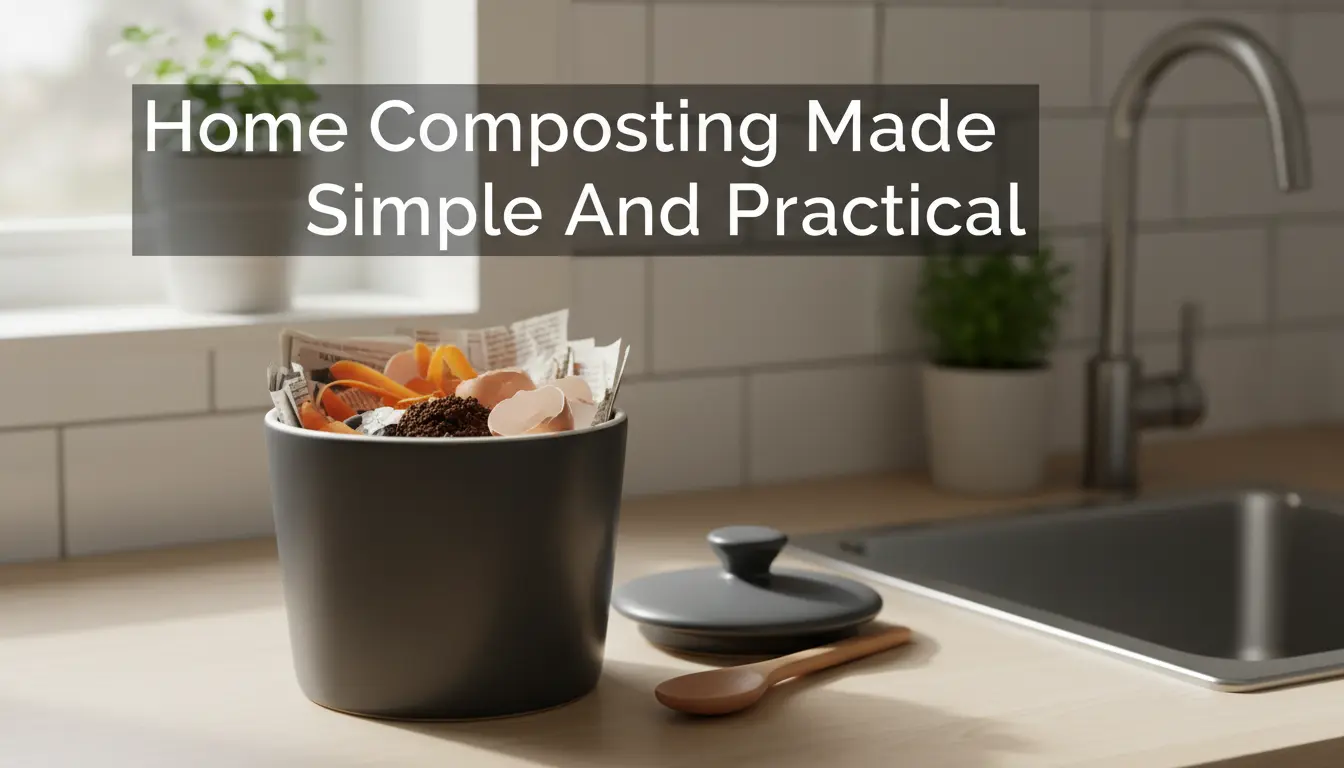
Home composting turns kitchen scraps and yard waste into a useful soil amendment. This practical guide explains simple steps to start composting at home, what to include, and how to avoid common problems.
What is home composting
Home composting is the controlled decomposition of organic materials like fruit peels, coffee grounds, and yard trimmings. The result is compost: dark, crumbly material that improves soil structure and plant growth.
Why choose home composting

Composting reduces household waste, lowers methane emissions from landfills, and produces free soil conditioner. It is a low-cost, low-energy way to improve garden health and divert waste.
Key benefits of home composting
- Reduces trash volume and collection costs.
- Improves soil water retention and fertility.
- Encourages a circular approach to household waste.
Getting started with home composting
Begin by choosing a composting method that fits your space and time. Options include an open pile, a tumbler, or a countertop worm bin for apartments.
Place the bin in a convenient spot with some shade and good drainage. You do not need specialized tools at the start—just a bin or container, a pitchfork or turning tool, and a scale of kitchen scraps and brown materials.
Basic compost mix and ratio

Compost needs a balance of green (nitrogen) and brown (carbon) materials. A simple guideline is:
- Greens: vegetable scraps, coffee grounds, fresh grass clippings.
- Browns: dry leaves, shredded paper, cardboard, straw.
A practical starting ratio is roughly 1 part greens to 2–3 parts browns by volume. Adjust if the pile is too wet or too slow to break down.
What to compost and what to avoid
Knowing what belongs in your home compost helps keep odors and pests away. Use the lists below as a quick reference.
Safe items for home composting
- Fruit and vegetable scraps
- Coffee grounds and tea bags (remove staples)
- Eggshells (crushed)
- Yard waste: leaves, small twigs, grass clippings
- Shredded paper, cardboard, and paper towels
Items to avoid in a home compost pile
- Meat, fish, and dairy (attract pests and cause odors)
- Oily or greasy foods
- Diseased plants or weeds with seeds
- Pet waste from carnivores
- Coal ash or charcoal residue
Troubleshooting common home composting problems
Most issues are easy to fix with small adjustments. Below are common problems and simple remedies.
Problem: Bad smell
A sour or rotten smell usually means the pile is too wet or has too many greens. Add dry browns, turn the pile, and keep it aerated.
Problem: Pests
If rodents or flies are a problem, bury food scraps in the center of the pile, use a closed bin or tumbler, and avoid adding meat or dairy.
Problem: Slow decomposition
Slow breakdown often means the pile is too dry or compacted. Add water until damp (not soggy) and mix in more greens to boost nitrogen. Chop large items into smaller pieces to speed decomposition.
Well-managed compost can reach temperatures of 130 to 160°F (55 to 70°C), which helps kill many weed seeds and pathogens. Turning a hot pile keeps it active and productive.
Small real-world example: Apartment composting case
Maria lives in a two-bedroom apartment and wanted to reduce waste. She chose a 5-gallon sealed countertop bin and a small outdoor compost tumbler for the summer months.
Maria collected fruit and vegetable scraps, coffee grounds, and egg shells in the countertop bin. Each evening she emptied the bin into the outdoor tumbler, added shredded paper, and turned it twice a week.
After three months the tumbler produced dark, crumbly compost Maria mixed into potted plants. Her household waste dropped noticeably, and she used less commercial potting mix.
Quick home composting checklist
- Choose a method: pile, tumbler, worm bin, or bokashi.
- Gather a balance of greens and browns (1:2 to 1:3 ratio).
- Keep the pile moist and aerated; turn regularly.
- Avoid meat, dairy, and pet waste.
- Chop large items and layer materials to speed breakdown.
Final tips for successful home composting
Start small and learn by doing. Track how your pile responds and make small adjustments to moisture and material balance.
Composting is flexible—adapt the approach to the time and space you have. With routine care, most households can produce useful compost within a few months.
Ready to start? Choose a bin, collect your first week of kitchen scraps, and follow the checklist above. Composting at home is one of the easiest ways to reduce waste and improve soil health.