
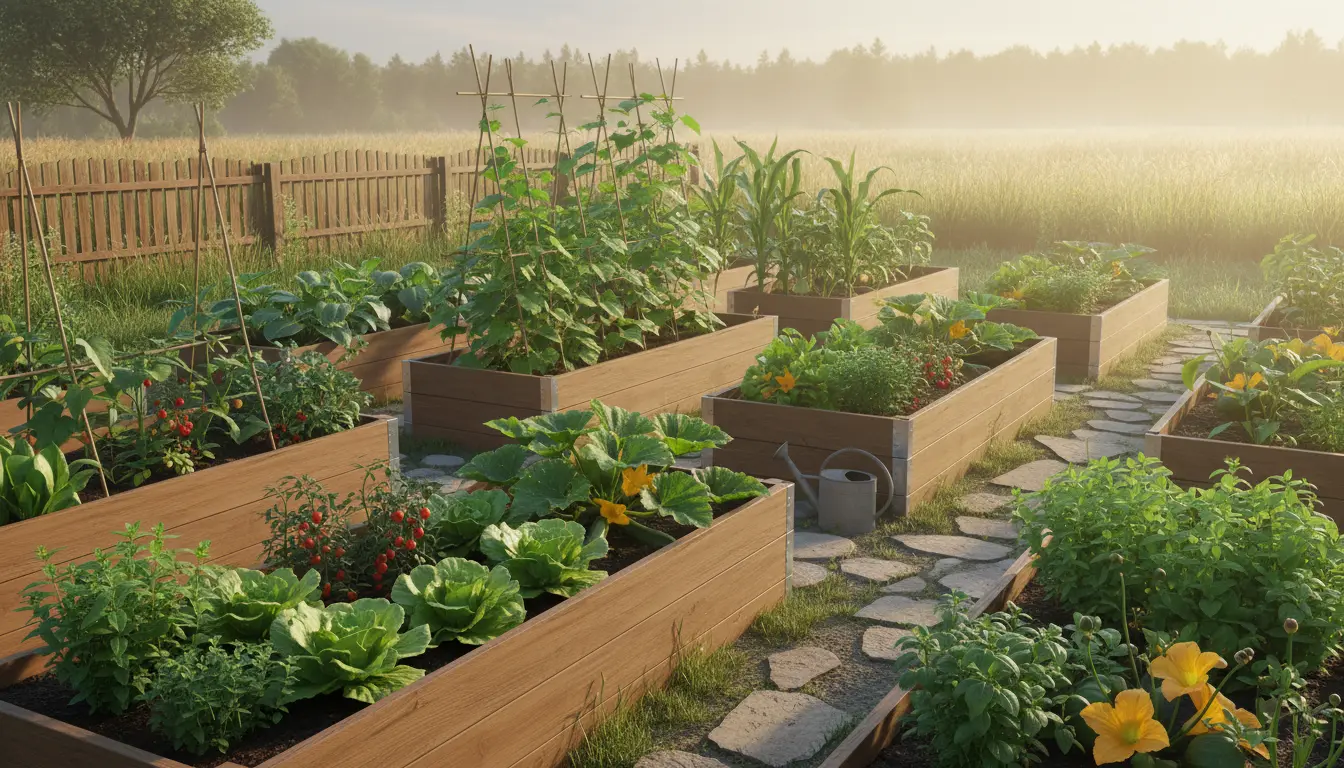
Starting a vegetable garden is an achievable project for any homeowner or renter with a balcony. This guide breaks down clear steps so you can plan, plant, and maintain a productive garden without overwhelm.
Why Start a Vegetable Garden
A vegetable garden improves food quality, reduces grocery costs, and gives hands-on control over what you eat. It also creates a routine and green space that supports well-being.
Choose the Right Site to Start a Vegetable Garden

Good site selection is one of the first and most important decisions when you start a vegetable garden. Vegetables need sunlight, access to water, and good drainage to thrive.
- Pick a spot with 6–8 hours of direct sun for most vegetables.
- Ensure water access: a hose or rain barrel nearby saves time.
- Avoid low spots where water pools; raised beds help with drainage.
Prepare Soil and Beds for a Successful Vegetable Garden
Soil quality determines plant health more than fancy tools. Testing soil and improving it is a small upfront investment that pays off through higher yields.
Start by testing pH and basic nutrients with a home kit or local extension service. Most vegetables prefer slightly acidic to neutral soil (pH 6.0–7.0).
- Add compost to increase organic matter and water retention.
- Use loose, friable soil for roots to develop easily.
- Consider raised beds (12–18 inches deep) for compaction-prone yards.
Soil Prep Steps

Work compost into the top 6–12 inches of soil and remove large debris or rocks. If using imported topsoil or a raised bed mix, choose a blend designed for vegetable gardening.
Pick Easy Vegetables to Start a Vegetable Garden
Begin with reliable, low-maintenance crops to build confidence. Fast-growing plants give quick results that encourage continued care.
- Leafy greens: lettuce, spinach, arugula.
- Root crops: radishes, carrots (choose shorter varieties for shallow beds).
- Nightshades and heat lovers: tomatoes, peppers (start with seedlings).
- Beans and peas: good for beginners and improve soil nitrogen.
Timing and Planting When You Start a Vegetable Garden
Timing depends on your climate and frost dates. Check local last frost dates and plan seeds or transplants accordingly.

Sow cool-season crops in early spring or fall. Plant warm-season crops after the final frost when soil has warmed.
Succession Planting Tips
Succession planting keeps harvests steady by staggering sowing dates. For example, plant lettuce every two weeks during cool months to spread harvests over time.
Watering and Mulching Basics
Consistent moisture is critical for vegetables. Deep, infrequent watering encourages strong root systems and reduces disease risk.
- Water at the base of plants to keep foliage dry.
- Use drip irrigation or soaker hoses for efficiency.
- Apply 2–3 inches of organic mulch to conserve moisture and suppress weeds.
Pest and Disease Management in a Vegetable Garden
Integrated pest management (IPM) focuses on prevention, monitoring, and targeted action. Start with cultural controls before chemical treatments.
- Rotate crops to reduce soil-borne diseases.
- Use row covers to protect seedlings from insects.
- Introduce beneficial insects like ladybugs for aphid control.
Harvesting and Storing Your Vegetables
Harvest at peak ripeness for best flavor and nutrition. Regular harvesting can also encourage more production in many plants.
- Leafy greens: harvest outer leaves, leave the crown to regrow.
- Tomatoes: pick when fully colored and slightly soft to the touch.
- Root crops: pull when roots reach recommended size for the variety.
Small Case Study: Quick Success From a Starter Plot
Case Study: On a 50 square foot raised bed, a beginner followed basic steps: full sun site, amended soil with compost, and simple watering. They planted lettuces, radishes, bush beans, and two determinate tomatoes.
Results in the first growing season: continuous salad greens for four months, three harvests of radishes, 20–25 pounds of tomatoes, and enough beans for regular family meals. Simple maintenance and regular harvesting led to steady yields.
Common Mistakes When You Start a Vegetable Garden
New gardeners often overplant, water too frequently, or ignore soil health. Avoid these pitfalls to save time and improve results.
- Overcrowding plants reduces airflow and increases disease risk.
- Shallow, daily watering creates shallow roots and stress during dry periods.
- Skipping soil testing can lead to nutrient imbalances and poor growth.
Next Steps After You Start a Vegetable Garden
After initial planting, schedule weekly checks for pests, water needs, and growth. Keep a simple garden journal noting planting dates and harvests to improve planning next season.
Consider expanding with companion plants, vertical supports, or a small compost bin to close the nutrient loop and improve long-term yields.
Follow these practical steps and you will have a productive vegetable garden that fits your space and lifestyle. Start small, learn each season, and scale up as your confidence grows.