
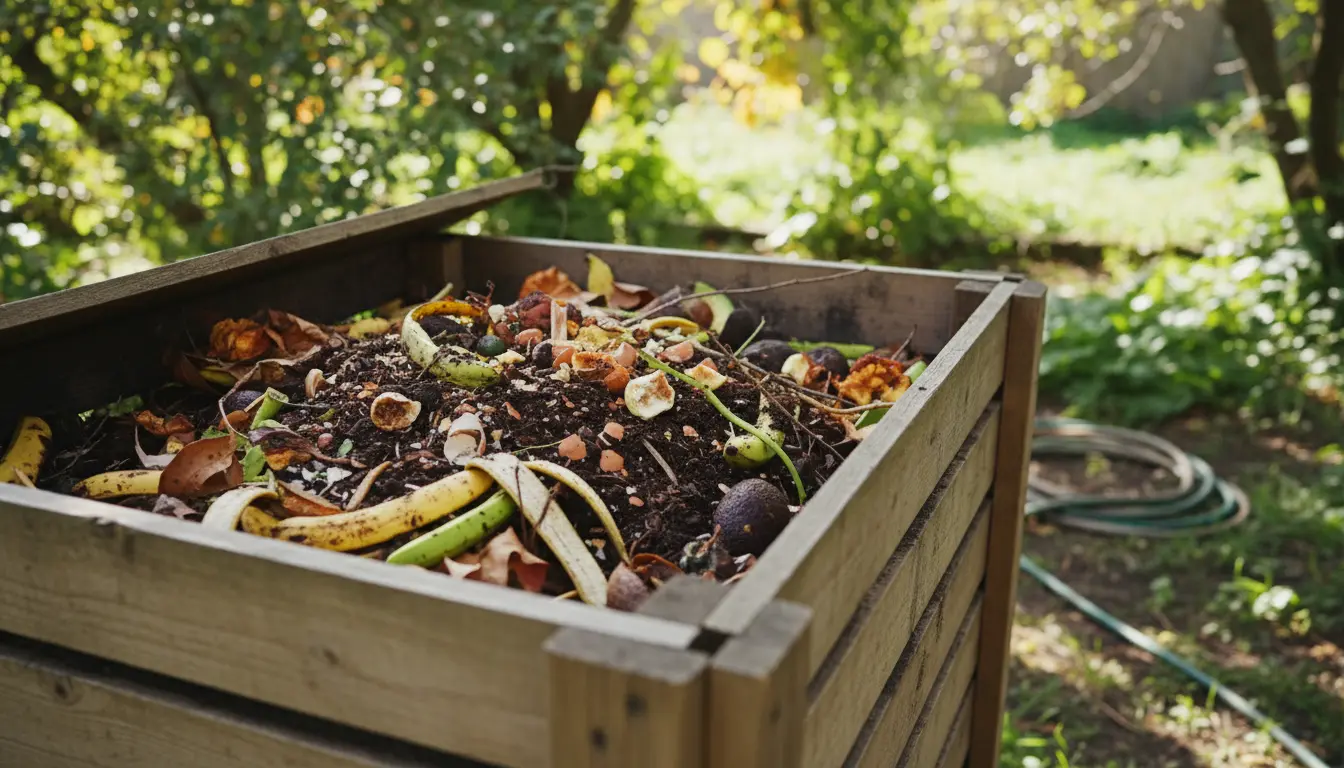
Why start composting at home
Composting at home reduces kitchen and yard waste while producing nutrient-rich soil for plants. It lowers landfill contributions and saves money on soil amendments.
This guide gives clear, practical steps to start composting, maintain a healthy pile, and use finished compost.
Basic supplies for home composting

You can begin with minimal equipment. A simple bin and a small patch of backyard are enough for most households.
- Compost bin or tumbler (or a simple DIY pile)
- Kitchen collection container with a lid
- Garden fork or aerator tool
- Water source (hose or watering can)
- Handheld thermometer (optional)
What to compost at home
Proper inputs help the pile heat up, decompose, and avoid odors. Think in terms of ‘greens’ and ‘browns’.
- Greens: fruit and vegetable scraps, coffee grounds, fresh grass clippings
- Browns: dry leaves, shredded paper, straw, cardboard
Avoid meat, dairy, oils, diseased plants, and pet waste in a typical backyard system.
Green to brown ratio for composting

Aim for a 1:3 ratio by volume of greens to browns for a balanced mix. This supplies nitrogen and carbon for microbes.
Example: one bucket of food scraps (greens) with three buckets of shredded leaves (browns).
How to start composting at home: step-by-step
Follow these practical steps to build your first compost pile or bin. Each step keeps the process manageable for beginners.
- Choose a location: pick a well-drained, partly shaded spot near a water source.
- Create a base layer: lay down coarse material like small branches to improve airflow.
- Add materials in layers: alternate browns and greens in roughly 3:1 ratio.
- Moisten: aim for a damp sponge consistency; add water if too dry.
- Turn regularly: aerate the pile every 1–2 weeks to speed decomposition.
Speeding up decomposition
Smaller pieces break down faster. Chop or shred yard waste and mix coffee grounds.
Keep the pile compact but porous. If you want faster results, use a thermophilic approach: larger piles (at least 1 cubic meter) reach higher temperatures and decompose quickly.
Troubleshooting common problems in home composting
Problems are usually easy to fix with a simple adjustment in moisture, aeration, or inputs.
- Bad smell: too wet or too many greens. Add dry browns and turn the pile.
- Pile not heating: insufficient greens, too small, or too dry. Add fresh scraps and water, then turn.
- Fruit flies: cover fresh food with leaves or bury scraps deeper in the pile.
- Slow decomposition: shred materials, increase surface area, and maintain moisture.
Composting can reduce household waste by up to 30 percent and returns valuable nutrients to the soil, improving water retention and plant health.
Using finished compost in your garden
Finished compost looks dark, crumbly, and earthy-smelling. It can be used in multiple ways in the garden.
- Top-dress lawns at a thin layer to add nutrients
- Mix into potting soil or garden beds to improve structure
- Use as a seed-starting mix component or soil amendment
How long until compost is ready?
Home compost can finish in 3 months to a year depending on materials, pile size, and how often you turn it. Fast methods can produce usable compost in 6–12 weeks.
Small case study: suburban family reduces waste
A family of four began composting kitchen scraps and yard trimmings in a 200-liter tumbler. They collected food scraps in a counter bucket and emptied it into the tumbler daily.
After six months of regular turning and balancing greens and browns, they produced enough compost to cover two vegetable beds and reported cutting their weekly trash by one bag.
Practical tips and final checklist for composting at home
Keep these simple tips handy to maintain a healthy system without extra stress.
- Monitor moisture: damp but not soggy
- Balance inputs: remember the 1:3 green to brown guideline
- Turn regularly for oxygen and even decomposition
- Protect from pests: use a closed bin or bury food scraps
- Use compost when it is dark and crumbly
Starting composting at home is low-cost and high-impact. With a few tools and regular attention, anyone can turn waste into a valuable soil resource for healthier plants and a smaller household footprint.