
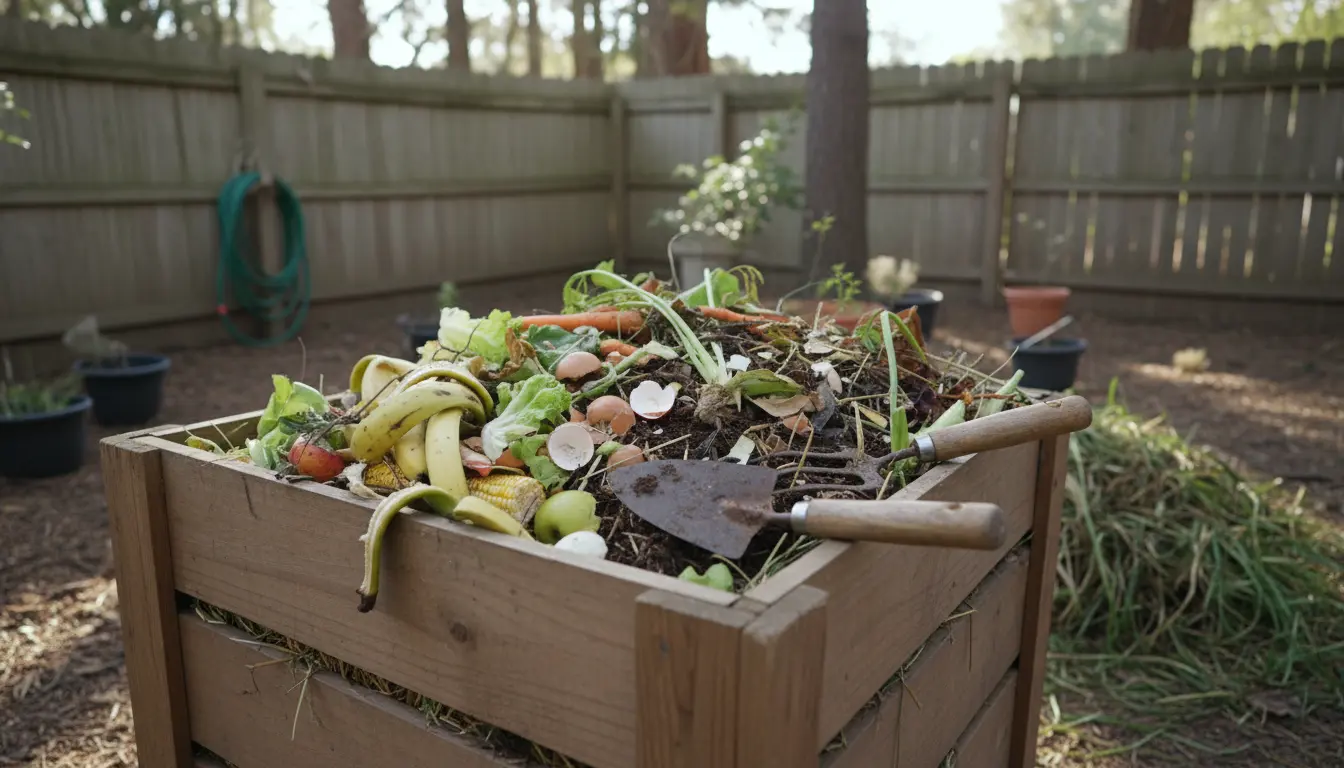
Home Composting for Beginners: Basic Overview
Home composting turns kitchen scraps and yard waste into nutrient-rich soil you can use in a garden or pots. It reduces household waste, saves money on fertilizer, and improves soil structure for healthier plants.
This short guide explains practical steps to start and maintain compost at home. No special equipment or advanced skills are required.
How to Start Home Composting for Beginners

Start by choosing a location and method that fits your living situation. Options include a simple backyard pile, a closed bin, or a worm composting system for indoor or small-space use.
Choose a Composting Method
Pick one based on space and time you can invest. Backyard piles work for larger yards. Tumblers speed up decomposition and reduce pests. Worm bins (vermicomposting) are ideal for apartments and produce very fine compost.
What to Add and What to Avoid
Knowing what to add makes composting easy and fast. Follow the green and brown rule for balance and air.
- Greens (nitrogen-rich): fruit and vegetable scraps, coffee grounds, fresh grass clippings.
- Browns (carbon-rich): dry leaves, shredded paper, cardboard, straw.
- Aim for a mix of roughly 2–3 parts browns to 1 part greens by volume to avoid odors.

Avoid these items in typical home compost:
- Meat, bones, and dairy (they attract pests and smell).
- Oily foods and large amounts of citrus or onion peels (can slow microbes).
- Diseased plant material or persistent weeds with seeds.
Setting Up the Compost Bin
Choose a bin size that fits your waste output. For a family, a 3×3 foot bin or two bins side-by-side works well. Small households can use a 20–30 gallon tumbler or a 10–20 gallon worm bin.
Line the bottom with coarse material like twigs or straw for drainage. Add alternating layers of greens and browns, keeping layers a few inches thick for airflow and balance.
Maintaining Your Compost Pile
Maintenance keeps decomposition active and prevents odors. Key factors are moisture, aeration, and particle size.
Moisture and Aeration
Compost should be about as damp as a wrung-out sponge. Add water during dry periods and add more browns if it becomes soggy. Turn or aerate the pile every 1–2 weeks to add oxygen for microbes.
Temperature and Breakdown
A healthy compost pile will warm as microbes break down material. Hot piles (around 130–150°F or 55–65°C) decompose faster and kill many pathogens and seeds. Cold piles decompose slower but still work over time.
Use a compost thermometer or simply watch activity: steaming in cool weather and steady heat mean decomposition is progressing.
Troubleshooting Common Problems
- Bad odor: Add more browns and turn the pile to increase airflow.
- Dry pile: Add water and greens to boost moisture and microbes.
- Slow breakdown: Chop materials smaller and maintain a good green-brown ratio.
Composting can reduce household waste by up to 30% and cut methane emissions from landfills. Even small-scale composting helps divert organics from trash.
Small Real-World Example: A City Balcony Compost Case Study
Maria lives in a city apartment and started a worm bin on her balcony. She used an 18-inch plastic bin with bedding made from shredded newspaper and kitchen veggie scraps.
Within four months she produced dark, crumbly compost used to top potting soil for balcony tomatoes. Her household food waste dropped by roughly 40% and her plants needed less fertilizer.
Key lessons from this case: keep the bin shaded, maintain moisture, and chop scraps into smaller pieces for faster results.
Using Finished Compost
Finished compost looks dark, crumbly, and earthy-smelling. It should no longer resemble original materials. Test readiness by sifting larger bits out and checking for uniform texture.
Use compost in these ways:
- Mix 1–2 inches into garden beds to improve soil structure and nutrients.
- Top-dress lawns with a thin layer to boost soil health.
- Blend into potting mix for houseplants and container gardens.
Practical Tips for Long-Term Success
- Save vegetable peels in a small counter pail to reduce trips outside.
- Chop or shred large materials to speed decomposition.
- Rotate bins or use two bins for continuous composting: one active and one curing.
- Keep a simple log of additions and turning to understand what mix works best.
Home composting for beginners is straightforward and flexible. Start small, learn by doing, and adjust ratios and methods to your space. Within months you can convert kitchen scraps into a valuable resource for healthier plants and less household waste.