
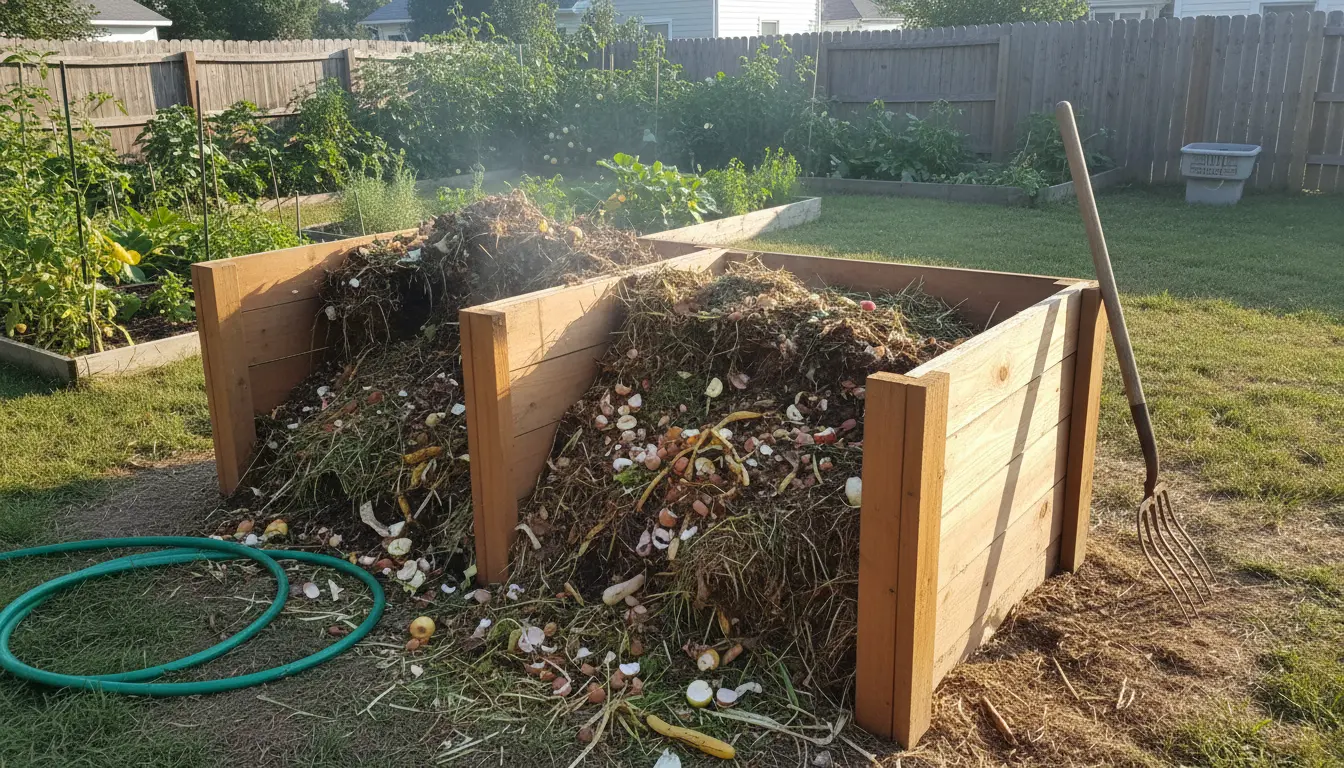
Home Composting Basics
Home composting turns kitchen and yard waste into a useful soil amendment. It reduces landfill waste and improves garden soil structure and fertility.
This guide explains how to start home composting for beginners with clear steps, common materials, and troubleshooting tips.
Why Home Composting Matters

Composting cuts organic waste that would otherwise produce methane in landfills. It also returns nutrients to the soil and can lower your need for chemical fertilizers.
For many households, a small compost system handles most kitchen scraps and garden trimmings, making it a practical, low-cost sustainability upgrade.
Home Composting Basics You Should Know
There are two common approaches: aerobic composting in a bin or pile, and vermicomposting using worms. Both methods work well for home composting for beginners.

Choose a method based on available space, time, and the type of waste you produce.
Benefits of home composting
- Reduces household waste volume
- Improves garden soil and plant health
- Conserves resources and lowers waste costs
How to Start Home Composting
Follow these simple steps to set up a successful compost system at home. Each step focuses on practical actions and materials you can source locally.
1. Pick a bin or spot
Choose a compost bin, tumbler, or a dedicated pile in your yard. For small spaces or patios, a compact tumbling bin or worm bin works well.
Ensure the location has partial shade and easy access to water and the kitchen for adding scraps.
2. Gather the right materials
Balance carbon-rich “browns” and nitrogen-rich “greens”. A good ratio leads to steady decomposition.
- Browns: dry leaves, shredded cardboard, straw, paper
- Greens: vegetable scraps, coffee grounds, fresh grass clippings
A general guideline is to use roughly three parts browns to one part greens by volume.
3. Build and maintain the pile
Start with a layer of coarse material for airflow. Alternate layers of greens and browns, keeping the pile moist like a wrung-out sponge.
Turn or aerate the pile every 1–2 weeks to introduce oxygen and speed up decomposition.
4. Monitor and troubleshoot
Check temperature, moisture, and smell. A healthy compost pile smells earthy and feels warm in the center.
Common problems include bad odors (usually too wet or too many greens) and slow breakdown (often too dry or compacted).
Troubleshooting Home Composting Problems
Most issues have simple fixes. Use this quick reference when things aren’t progressing.
- Bad smell: Add more browns and turn the pile to add air.
- Pile too wet: Add shredded paper, dry leaves, or move to a drier spot.
- No heat or slow composting: Chop materials into smaller pieces and mix in more greens if needed.
- Pests: Avoid adding meat, dairy, or oily foods; secure the bin and bury scraps inside the pile.
Vermicomposting Option
Vermicomposting uses worms to convert food scraps into high-quality castings. It works well indoors and in small outdoor spaces.
Use red wiggler worms, keep the bin moist but not soggy, and feed them small amounts of food scraps regularly.
Practical Tips for Home Composting Success
- Chop or shred larger items to speed decomposition.
- Keep a small counter bucket for kitchen scraps to make regular additions easy.
- Use finished compost in potted plants, vegetable beds, or as a top dressing for lawns.
Small Case Study: A Household Success Story
Maria, a family of four, started home composting in a 60-liter tumbling bin. They separated kitchen scraps and yard waste and followed a three-to-one brown to green rule.
In six months, they produced enough compost to cover two vegetable beds. Their household waste to trash declined by about 35%, and their tomatoes grew noticeably healthier.
Examples of What to Compost and Avoid
Common acceptable items include fruit and vegetable scraps, coffee grounds, tea bags (without plastic), eggshells, and yard trimmings.
Avoid meat, dairy, oily foods, and pet waste in typical home compost systems; these attract pests and create odor issues.
Final Checklist for Home Composting Beginners
- Choose a bin or method that fits your space
- Collect and balance greens and browns
- Turn the pile regularly and keep it moist
- Monitor for odors, pests, and moisture issues
- Harvest finished compost after 2–6 months depending on conditions
Home composting for beginners is straightforward with consistent, small steps. Start small, learn the balance, and scale as you gain confidence.